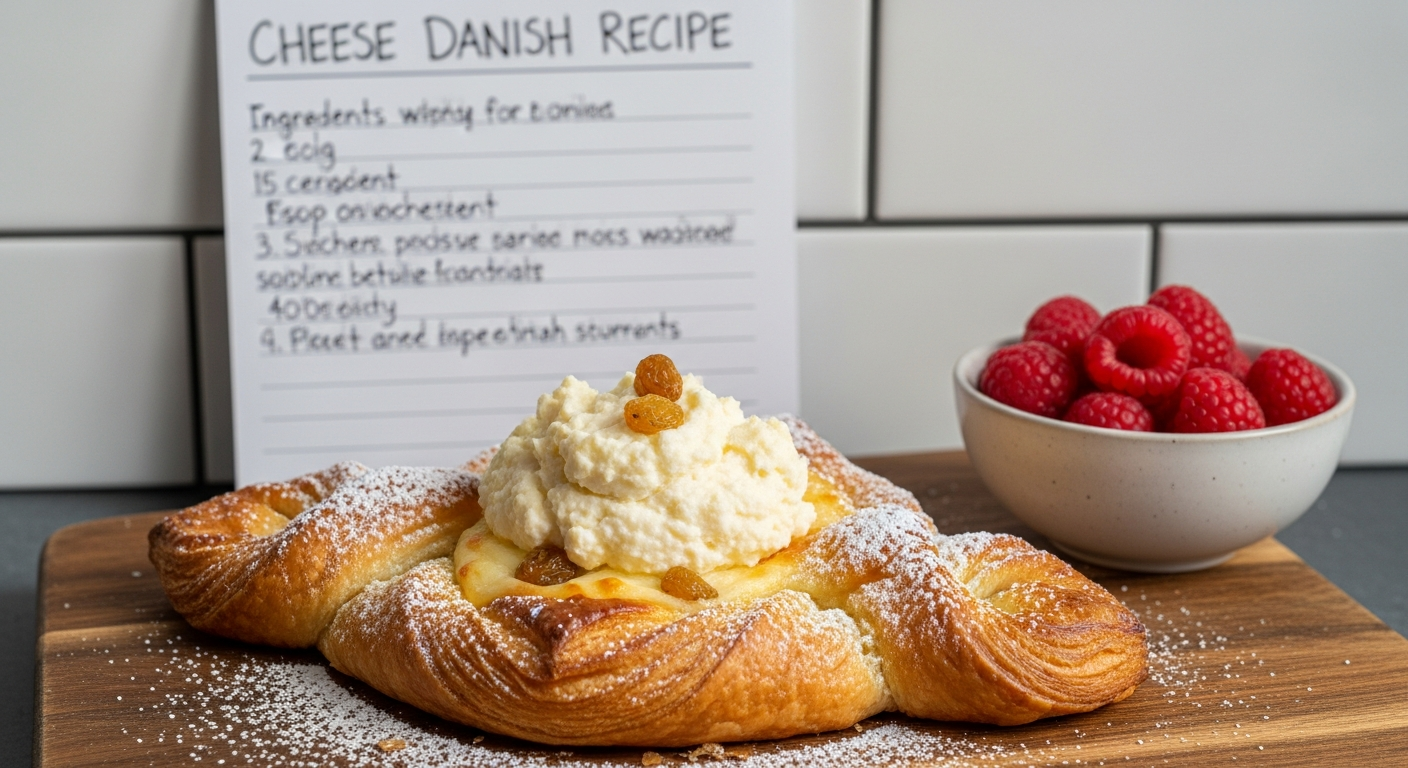
A Cheese Danish Recipe brings together flaky pastry layers and a rich, creamy cheese filling that feels both indulgent and comforting. Often seen in bakery windows or enjoyed with morning coffee, cheese danish pastries may look complicated, but they are surprisingly achievable at home. With the right ingredients, a little patience, and a clear process, you can create a golden, buttery danish that rivals any professional bakery.
This guide walks you through everything you need to know about making a homemade cheese danish, from understanding the dough to preparing the perfect filling and baking it to perfection.
What Makes a Cheese Danish Special
A cheese danish is known for its contrast in textures and flavors. The outer pastry is light, crisp, and flaky, while the center is smooth, slightly tangy, and lightly sweet. Traditional cheese danish recipes are based on laminated dough, similar to croissants, which creates multiple layers of butter and dough.
What truly defines a great cheese danish is balance. The pastry should not overpower the filling, and the cheese mixture should not be overly sweet. When done right, every bite melts in your mouth with just the right amount of richness.
Ingredients Needed for a Classic Cheese Danish Recipe
A traditional cheese danish recipe relies on simple ingredients, but quality matters. For the dough, you’ll need flour, yeast, sugar, milk, eggs, butter, and salt. High-fat butter is essential because it creates the flaky layers during baking.
The cheese filling typically uses cream cheese as the base. Sugar, egg yolk, vanilla extract, and sometimes lemon zest are added to enhance flavor. Some variations include ricotta or mascarpone for a softer, more delicate texture.
An egg wash made from egg and milk is brushed on top before baking to give the danish its signature golden color.
Choosing the Right Dough Option
When making a cheese danish recipe at home, you have two main dough options. You can prepare homemade laminated dough, or you can use high-quality store-bought puff pastry.
Homemade dough offers a more authentic bakery-style result and deeper flavor, but it requires time and careful folding. Store-bought puff pastry, on the other hand, is convenient and still delivers excellent results, especially for beginners.
If you’re short on time, puff pastry allows you to focus on perfecting the cheese filling and shaping the danish.
Preparing the Creamy Cheese Filling
The cheese filling is the heart of any cheese danish recipe. Cream cheese should be softened before mixing to ensure a smooth texture. Sugar is added gradually to avoid graininess, and egg yolk helps create a rich, custard-like consistency.
Vanilla extract adds warmth, while lemon zest or juice brings a subtle brightness that balances the richness of the cheese. The filling should be thick enough to hold its shape during baking but soft enough to feel creamy when eaten.
Overmixing should be avoided, as it can introduce too much air and cause the filling to puff unevenly.
Shaping Your Cheese Danish
Shaping is where creativity comes into play. A cheese danish recipe can be shaped into classic squares, pinwheels, envelopes, or braided designs. Regardless of shape, the goal is to leave space in the center for the cheese filling.
The pastry should be rolled evenly to ensure consistent baking. When folding or twisting, avoid pressing too hard, as this can seal the layers and reduce flakiness. Once shaped, the filling is spooned gently into the center.
Allowing the shaped danish to rest briefly before baking helps the dough relax and bake more evenly.
Baking the Danish to Golden Perfection
Baking temperature is critical for a successful cheese danish recipe. A hot oven allows the butter in the dough to create steam, which forms the flaky layers. Most recipes call for baking at around 375°F (190°C).
The danish should bake until puffed and deeply golden. The filling should look set but still slightly soft in the center. Overbaking can dry out both the pastry and the cheese filling.
Once out of the oven, letting the danish cool slightly helps the filling firm up while keeping the pastry crisp.
Optional Glazes and Toppings
While a cheese danish is delicious on its own, many recipes include a light glaze. A simple mixture of powdered sugar and milk or lemon juice drizzled over the cooled pastry adds sweetness and visual appeal.
Some bakers add sliced almonds, coarse sugar, or a fruit topping like raspberry or blueberry jam. These additions complement the creamy filling without overpowering the classic cheese flavor.
Glazing should be done after the danish has cooled to prevent it from melting into the pastry.
Tips for Perfect Results Every Time
Consistency is key when making a cheese danish recipe. Keeping ingredients cold, especially the butter and dough, helps maintain flaky layers. Measuring ingredients accurately ensures the filling sets properly.
Working in a cool kitchen environment is ideal, as warm temperatures can soften the dough too quickly. If the dough becomes difficult to handle, chilling it briefly can make shaping easier.
Practice also plays a role. Each batch helps you better understand dough texture, baking time, and flavor balance.
Storing and Serving Cheese Danish
Cheese danish pastries are best enjoyed fresh on the day they are baked. However, leftovers can be stored in an airtight container in the refrigerator for up to three days.
Reheating in the oven for a few minutes helps restore crispness. Microwaving is faster but may soften the pastry too much.
Cheese danish pairs beautifully with coffee or tea and works equally well as a breakfast treat or afternoon snack.
Why This Cheese Danish Recipe Is Worth Making
Making a cheese danish recipe at home offers a sense of accomplishment and control over ingredients. You can adjust sweetness, experiment with shapes, and even add your favorite flavors.
Homemade cheese danish also fills your kitchen with an irresistible aroma that store-bought pastries can’t match. Once you master the basics, it becomes a versatile recipe you can customize endlessly.
Frequently Asked Questions
Can I use puff pastry instead of homemade dough for a cheese danish recipe?
Yes, store-bought puff pastry works very well and saves time. It still delivers flaky layers and is ideal for beginners.
What type of cheese is best for cheese danish?
Cream cheese is the most commonly used and provides the classic flavor and texture. Ricotta or mascarpone can also be blended in for variation.
Can I make cheese danish ahead of time?
You can prepare and shape the danish ahead of time and refrigerate them overnight. Bake fresh the next day for best results.
Why did my cheese filling spread too much?
This usually happens if the filling is too thin or overmixed. Make sure the cream cheese is well balanced with egg and sugar.
Can cheese danish be frozen?
Yes, baked cheese danish can be frozen and reheated in the oven. Unbaked shaped danish can also be frozen and baked directly from frozen with extra baking time.