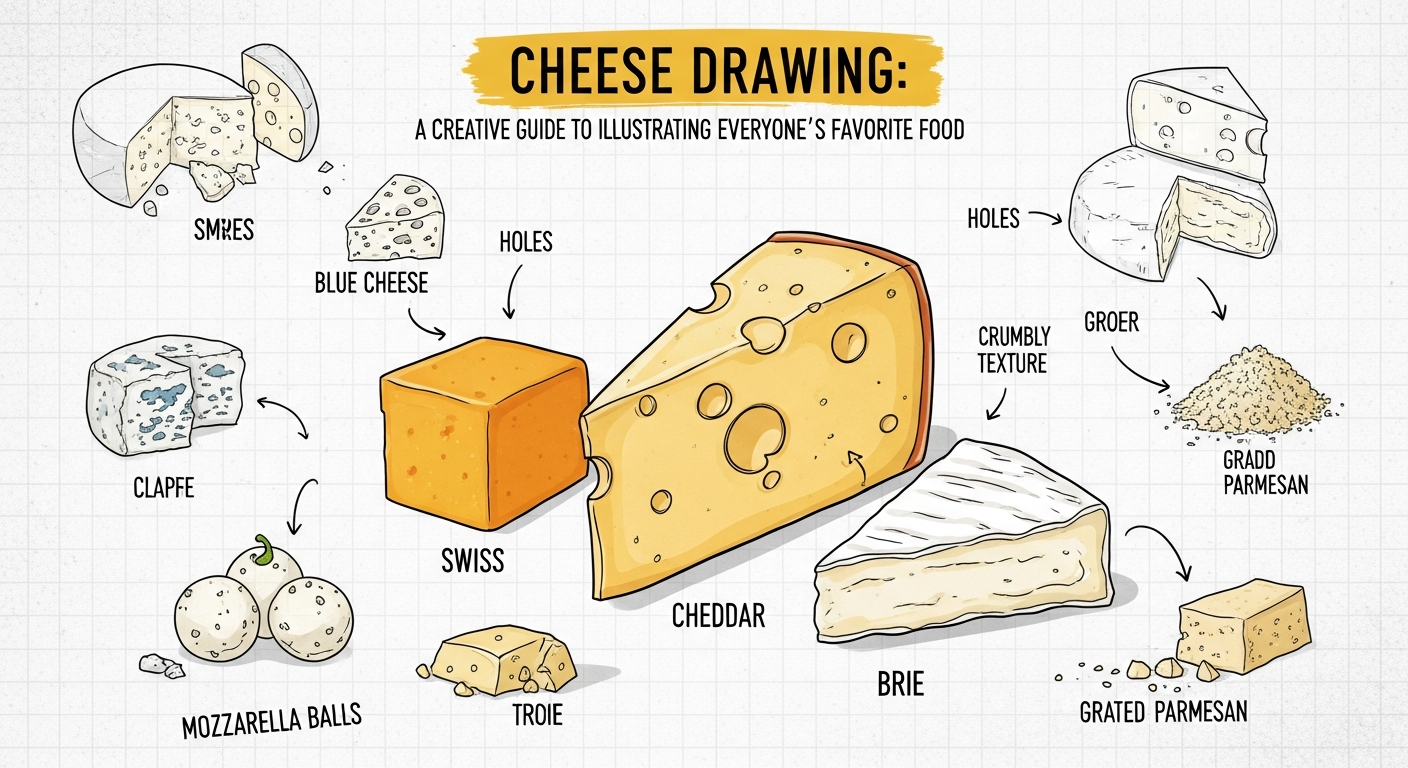
Cheese drawing is a fun, expressive, and surprisingly versatile form of art that appeals to beginners and experienced artists alike. From simple cartoon wedges to highly detailed realistic illustrations, cheese offers endless creative possibilities. Its recognizable shapes, textures, and colors make it an excellent subject for learning drawing fundamentals while still allowing room for imagination and personal style.
In recent years, cheese drawing has gained popularity across sketchbooks, digital art platforms, and social media. Artists use cheese as a playful subject in food illustration, character design, educational artwork, and even branding concepts. Whether you are drawing for relaxation, practice, or professional purposes, cheese drawing is a delightful way to sharpen your artistic skills.
What Is Cheese Drawing?
Cheese drawing refers to the artistic representation of cheese using traditional or digital drawing methods. It can range from minimal line sketches to detailed, realistic renderings that capture texture, shadows, and depth. Cheese is particularly appealing as a subject because it comes in many forms—wheels, wedges, slices, cubes, melted drips, and holes—each offering unique visual challenges.
Artists often choose cheese drawing because it is approachable. Even simple shapes can look appealing, making it ideal for beginners. At the same time, advanced artists can explore complex lighting, surface texture, and realism using the same subject.
Why Cheese Is a Popular Drawing Subject
One of the biggest reasons cheese drawing is so popular is familiarity. Almost everyone recognizes cheese instantly, which makes drawings relatable and engaging. Cheese is also associated with comfort, humor, and indulgence, giving artwork a warm and playful tone.
Another advantage is variety. Soft cheeses appear smooth and creamy, while aged cheeses have cracks, rough edges, and bold textures. Swiss-style cheese introduces holes and depth, while melted cheese allows artists to experiment with motion and fluidity. This diversity keeps the subject fresh and interesting.
Essential Tools for Cheese Drawing
Cheese drawing can be done with nearly any art tool. Traditional artists often use pencils, charcoal, ink pens, colored pencils, or markers. Each medium creates a different effect, from soft shading to bold outlines.
Digital artists may use drawing tablets and software to experiment with layers, textures, and lighting effects. Digital tools also make it easy to correct mistakes and test different color palettes. Regardless of the medium, understanding light, form, and proportion is more important than having expensive tools.
Basic Steps to Draw Cheese
The process of cheese drawing usually begins with simple shapes. Most cheese can be broken down into triangles, rectangles, or circles. Starting with these basic forms helps establish proportion and perspective.
Once the outline is complete, artists add details such as holes, cracks, or uneven edges. Shading follows, giving the cheese volume and dimension. Finally, highlights and shadows are refined to create a realistic or stylized look, depending on the artist’s goal.
Types of Cheese Drawing
Different Styles of Cheese Illustration
Cartoon cheese drawing
Realistic cheese drawing
Cute or kawaii cheese drawing
Minimalist cheese line art
Digital cheese illustration
Cheese character design
Each style serves a different purpose. Cartoon cheese drawing is great for children’s books and stickers, while realistic cheese drawing is often used in food blogs, menus, or educational materials. Minimalist cheese drawings work well for logos and branding, and character-based cheese art is popular in animation and merchandise.
Cheese Drawing for Beginners
For beginners, cheese drawing is an excellent way to practice observation and shading. Starting with a simple wedge of cheese helps new artists focus on form without feeling overwhelmed. Using references, such as photos of cheese, can improve accuracy and confidence.
Beginners are encouraged to experiment without worrying about perfection. Cheese drawing is playful by nature, so embracing imperfections can actually add charm and personality to the artwork.
Advanced Techniques in Cheese Drawing
Advanced artists often focus on realism and texture. This includes studying how light interacts with cheese surfaces, how shadows fall beneath it, and how small imperfections make the drawing more believable. Cross-hatching, blending, and layered shading are commonly used techniques.
In digital cheese drawing, artists may use texture brushes to simulate porous surfaces or glossy highlights for melted cheese. Color theory also plays an important role, as cheese is rarely just yellow—it often includes warm oranges, cool creams, and subtle browns.
Uses of Cheese Drawing
Cheese drawing is not just for fun; it has practical applications as well. Food illustrators use cheese drawings in cookbooks, recipes, and packaging. Educators use them in learning materials to explain food groups or cultural cuisine. Designers incorporate cheese illustrations into branding, advertisements, and social media content.
In personal art projects, cheese drawing is often used for sketchbook practice, gifts, prints, or decorative art. Its universal appeal makes it suitable for many creative contexts.
Common Mistakes to Avoid
One common mistake in cheese drawing is oversimplifying shading. Flat color without shadows can make cheese look lifeless. Another mistake is making holes or textures too uniform, which reduces realism. Cheese is naturally irregular, and embracing that randomness improves the final result.
Ignoring reference images can also limit progress. Observing real cheese helps artists understand how texture, color, and shape work together.
Conclusion
Cheese drawing is a delightful and versatile art form that blends simplicity with creative depth. Whether you are sketching a quick cartoon wedge or crafting a detailed realistic illustration, cheese offers endless opportunities to practice and express artistic ideas. Its approachable shapes make it beginner-friendly, while its textures and variations challenge advanced artists.
By experimenting with styles, tools, and techniques, anyone can enjoy the process of cheese drawing. It is not just about drawing food—it is about creativity, observation, and having fun with art.
FAQs About Cheese Drawing
1. Is cheese drawing good for beginners?
Yes, cheese drawing is excellent for beginners because it uses simple shapes and allows easy practice of shading and texture.
2. What tools are best for cheese drawing?
Pencils, colored pencils, markers, and digital drawing tools all work well. The best tool depends on your preferred style.
3. Can cheese drawing be used professionally?
Absolutely. Cheese drawings are commonly used in food illustration, branding, packaging, and educational materials.
4. How can I make my cheese drawing look realistic?
Focus on light, shadow, texture, and color variation. Using reference images helps improve realism.
5. Is digital cheese drawing better than traditional drawing?
Neither is better; both have advantages. Digital drawing offers flexibility, while traditional drawing builds strong foundational skills.