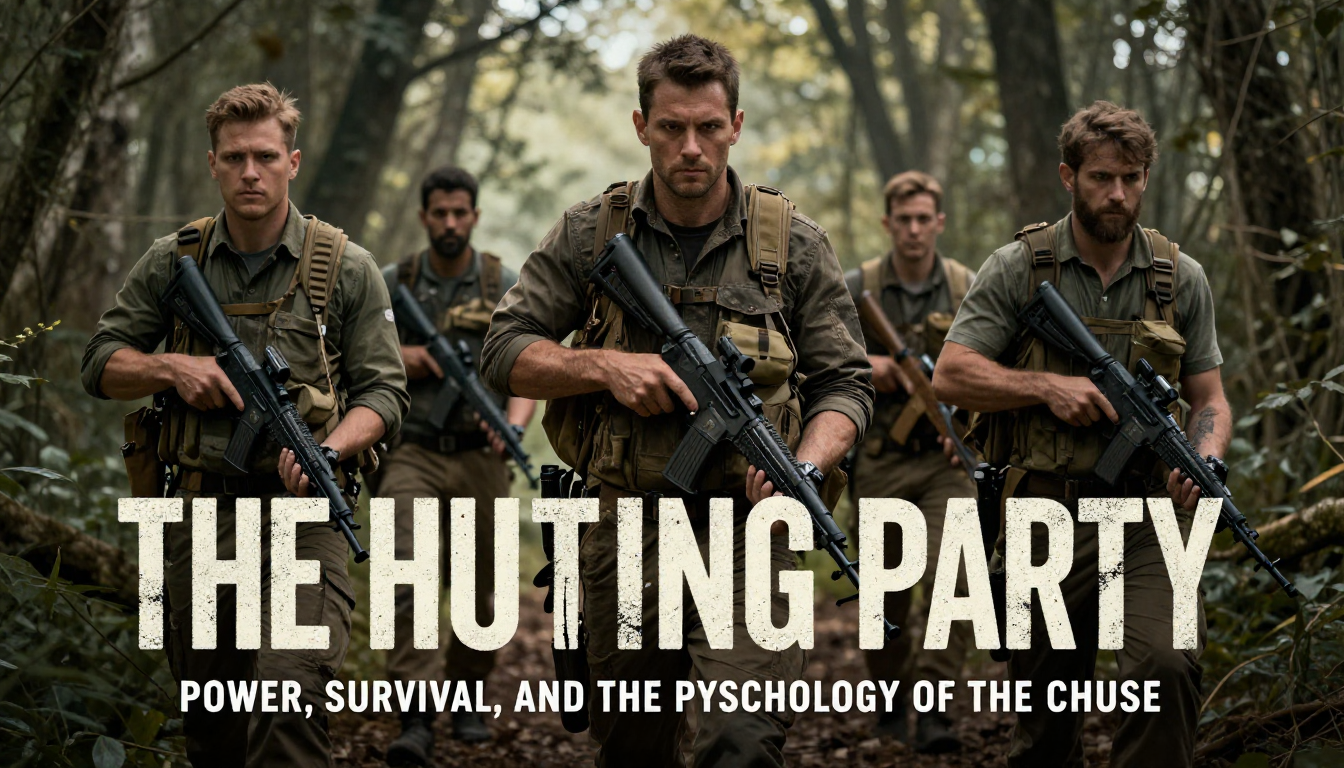
The Hunting Party is a phrase that evokes mystery, tension, survival, and human instinct. Whether used in literature, film, or metaphorically in real life, it carries layered meanings—ranging from an actual group tracking game in the wilderness to a symbolic pursuit of truth, justice, or even revenge. Across cultures and media, the concept of a hunting party has been explored to examine power, morality, leadership, fear, and the fragile boundaries between civilization and savagery.
In this article, we explore the origins of the hunting party, its historical roots, its presence in literature and film, and its deeper symbolic interpretations.
Historical Origins of The Hunting Party
Historically, a hunting party referred to an organized group of hunters who gathered to track and capture wild animals. These events were often social, political, and even ceremonial occasions.
In medieval Europe, royal hunting parties were extravagant affairs. Kings and nobles used hunts to demonstrate dominance over land and nature. For example, during the reign of King Henry VIII, hunting was not just sport but a statement of power and prestige. Participation signified status, loyalty, and privilege.
In many Indigenous cultures, hunting parties were essential for survival. Unlike aristocratic hunts, these expeditions were rooted in community cooperation, respect for nature, and spiritual balance. The group dynamic ensured safety, efficiency, and shared responsibility.
Thus, the hunting party began as both a survival mechanism and a social ritual—shaping its later metaphorical uses.
The Hunting Party in Literature
The hunting party has long been a compelling literary device. Writers use it to create suspense, explore morality, and expose social hierarchies.
One powerful example of hunting as metaphor appears in The Most Dangerous Game. In this story, the traditional roles of hunter and hunted are reversed, forcing readers to confront ethical dilemmas about power and survival.
Similarly, in Lord of the Flies, the act of hunting becomes symbolic of humanity’s descent into savagery. What begins as a practical need for food evolves into a violent obsession. The “hunting party” in this context reveals how quickly societal rules can dissolve under pressure.
Modern thriller novels often use a hunting party scenario—friends retreating into isolated forests or mountains—only to unravel secrets, betrayals, and hidden motives. The wilderness setting strips away comfort and forces characters to confront their true selves.
The Hunting Party in Film and Television
Cinema has embraced the hunting party as a gripping narrative framework. It allows filmmakers to combine action, suspense, and psychological drama.
The film The Hunting Party, starring Richard Gere, explores a group of journalists pursuing a war criminal. Here, the “hunt” is not for animals but for justice. The title cleverly reframes hunting as investigative pursuit.
Another intense adaptation is The Most Dangerous Game, which portrays human beings as prey. The horror element lies not in monsters but in the capacity for cruelty within people.
Television series like Game of Thrones also feature hunting scenes that reveal political tension, shifting alliances, and impending conflict. In such contexts, the hunting party serves as a backdrop for character development and dramatic turning points.
Through visual storytelling, the hunting party becomes more than a plot device—it becomes a crucible where power and morality collide.
Symbolism Behind The Hunting Party
Beyond literal meaning, the hunting party carries strong symbolic weight.
Power and Control
Hunting traditionally implies dominance—the hunter controls fate while the prey struggles for survival. In storytelling, this dynamic reflects political authority, social hierarchy, or personal manipulation.
Civilization vs. Savagery
When a group isolates itself in the wilderness, social norms weaken. The hunting party often reveals how thin the veneer of civilization truly is.
Group Psychology
A hunting party operates as a collective. Decisions are influenced by leaders, peer pressure, and shared fear. This makes it a powerful symbol for mob mentality and collective responsibility.
The Hunter Becoming the Hunted
One of the most compelling symbolic reversals is when hunters become prey. This twist challenges assumptions about superiority and forces introspection about ethics and justice.
The Psychological Dimension of The Hunting Party
Psychologically, the hunting party dynamic exposes primal instincts. Humans possess ancient survival wiring—fight, flight, and dominance behaviors.
When placed in high-stress situations such as survival hunts, individuals may act in ways they never would in structured society. Leadership emerges naturally, but so do rivalry and fear.
Studies in social psychology show that group behavior can intensify aggression. When responsibility is shared, individuals may feel less accountable. The hunting party framework magnifies this phenomenon, making it ideal for thrillers and dramas.
At the same time, it can also reveal cooperation, bravery, and sacrifice. Not all hunting party narratives are dark; some highlight teamwork and resilience.
The Hunting Party as a Modern Metaphor
Today, “the hunting party” often serves as a metaphor beyond the wilderness.
In journalism, investigative teams may describe themselves as being on a hunt for truth. In politics, opposition groups form metaphorical hunting parties targeting corruption. In business, companies pursue market dominance with strategic hunts for innovation.
The digital age has also introduced online “hunting parties,” where social media users collectively pursue individuals or stories—sometimes responsibly, sometimes destructively.
This modern interpretation retains the core elements: pursuit, strategy, cooperation, and tension.
Themes Commonly Found in Hunting Party Narratives
Certain themes repeatedly appear in stories centered on a hunting party:
Isolation
Wilderness settings heighten vulnerability and suspense.
Moral Conflict
Characters must decide how far they are willing to go to achieve their goals.
Reversal of Roles
Hunters may become hunted, flipping power structures.
Leadership and Betrayal
Group dynamics often fracture under pressure.
Survival
At its core, the hunting party tests who will endure and at what cost.
These themes ensure that the concept remains compelling across genres.
Cultural Interpretations of The Hunting Party
Different cultures interpret hunting parties in unique ways.
In aristocratic European traditions, hunting symbolized prestige and land ownership. In Indigenous communities, it reflected harmony with nature and communal responsibility.
Modern Western storytelling often frames hunting parties as morally ambiguous or dangerous. Meanwhile, survival-based narratives may present them as necessary and heroic.
The meaning shifts depending on cultural context, yet the core idea of organized pursuit remains universal.
Why The Hunting Party Remains Popular
The enduring popularity of the hunting party concept stems from its adaptability. It can be:
A survival story
A psychological thriller
A political allegory
A moral parable
An action-adventure narrative
Few narrative structures are as flexible while maintaining inherent tension.
The simplicity of the setup—a group pursuing a target—allows writers and filmmakers to explore complex human emotions without elaborate exposition.
Conclusion
The hunting party is far more than a group of individuals tracking prey. It is a powerful narrative and symbolic framework that explores dominance, morality, group psychology, and survival. From medieval royal forests to modern political dramas, the concept has evolved while retaining its primal core.
Whether depicted in classic literature like Lord of the Flies or films such as The Hunting Party, the hunting party continues to captivate audiences. It forces us to confront uncomfortable truths about power, human instinct, and the fragile boundaries of civilization.
In every era, the hunting party asks the same essential question: when the chase begins, who truly holds the power?
FAQs
What does “the hunting party” mean?
Traditionally, it refers to a group organized to hunt animals. Symbolically, it can represent any organized pursuit—of truth, justice, power, or survival.
Why is the hunting party a common theme in literature?
It creates built-in tension, isolates characters, and allows exploration of power dynamics, morality, and survival instincts.
Is the hunting party always about violence?
Not necessarily. While it often involves danger, it can also symbolize teamwork, justice, or strategic pursuit in non-violent contexts.
What is an example of a hunting party in fiction?
The Most Dangerous Game is a famous example where hunting becomes a psychological and moral battle between hunter and prey.
What themes are usually connected to the hunting party?
Common themes include survival, power, leadership, betrayal, civilization versus savagery, and moral conflict.


